
Five Early Warning Signs You Need New Brakes
It’s the start of a new year, which unfortunately means your car is officially one model year older and needier. But if you remain on the lookout for the right warning signs, you can stay ahead of any costly maintenance your vehicle stands to inherit this year. Recognizing these red flags and moving quickly to address them can greatly extend your vehicle’s lifespan.
First up: determining if you’ll need new brakes in 2024. Courtesy of Abeloff GMC, here are five early signals that your brakes might be calling for your help.
High-Pitched Screeching
Often, you’ll hear brake problems before you see or feel them. That’s thanks to the high-pitched screeching sound that emits from your brake pads when they’re thinning. The screeching isn’t a direct result of wearing brakes, though. Manufacturers intentionally insert a piece of metal into the brake pads to alert you when they need to be replaced.
If the squealing sounds continue despite new brake pads, your rotors are the next thing that needs inspecting, as they may have glazed. This occurs when metal heats up and burns due to excessive braking. Check your rotors for blue marks or a dark ring; either could indicate that the rotors also need replacement.
If the screeching is replaced by a heavy, metallic, grinding noise, that means your brake pads have completely worn down past the point where replacing them is possible. Take your car in for brake service immediately if this sound emerges, as it could lead to larger safety concerns.
The Eye Test
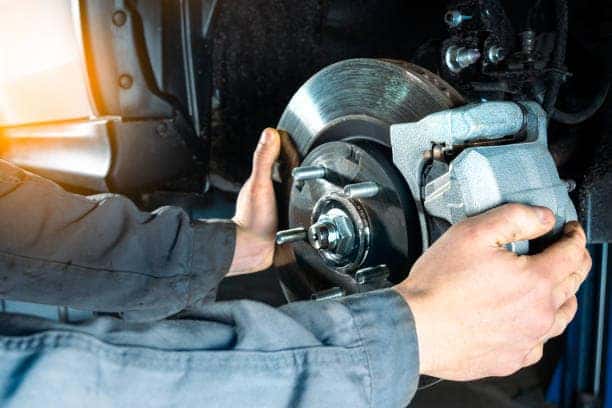
Sometimes it’s easier not to overthink things. If your brake pads look like they have a problem, it’s likely because they do. You can find them wedged between the wheels’ spokes, pressed up against the rotors. Measure the pads, and if you find they’re less than a quarter of an inch thick, it may be time to schedule your service with us at Abeloff GMC.
Performance Anomalies
When your brakes stop responding as quickly as they should, it may be a sign of a leak in your braking system. If your brakes are sending out vibrations (the kind that causes your steering wheel to shake, not the Beach Boys kind), either the brake pads or rotors need replacing.
Your brakes are constantly sending messages like these to alert you to their condition. The more in tune you are with your vehicle, the better you’ll get at assessing when and why your vehicle is performing abnormally.
Extreme Sensitivity
You might start your car today to find your brakes unusually sensitive, jerking to a halt at the slightest tap of the brake pad. This is due to either the rotors wearing down unevenly or the brake fluid needs replacement.
Conversely, you have a problem when your brakes prove too insensitive and only engage when you apply excess pressure. This could be a symptom of low brake fluid, thin brake pads, or even a sign that something is amiss with your car’s hydraulic system.
Puddle of Doom
The last thing you want to see on a bright, sunny day is a puddle formed beneath your idle car. Unless it’s residue from a forgotten overnight storm, it’s most likely your brake fluid dripping out of your car after a leak. You should be able to tell the difference between regular motor oil and brake fluid, which is notably thinner.
Taking a Break
Life is full of starts and stops, but you should still have some autonomy over them. Don’t leave your fate to the whims of faulty brake pads or rotors. Visit us at Abeloff GMC today, where we never put the brakes on a good deal. With our inventory of new and used vehicles at your disposal, you’re sure to find the car, truck, or SUV that pulls out all the stops.
0 comment(s) so far on Five Early Warning Signs You Need New Brakes